
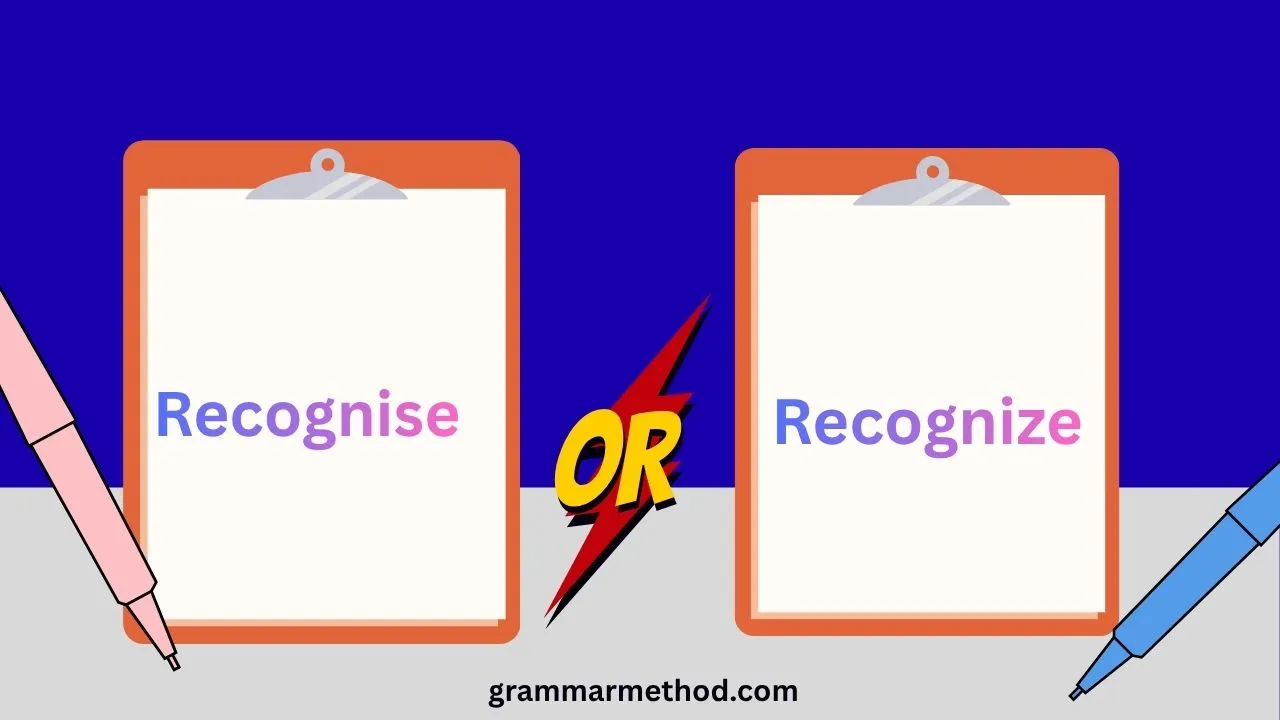
Are you ever confused about whether to write recognise or recognize? You’re not alone, as both spellings are correct, but the right choice depends on the type of English you’re using. Recognise is the preferred spelling in British English, while recognize is commonly used in American English.
Although they look slightly different, both words have exactly the same meaning: to identify someone or something, remember something familiar, or acknowledge a fact. Understanding the difference between recognise or recognize can help you avoid spelling mistakes and make your writing more consistent.
Whether you’re writing an academic assignment, a professional email, or everyday content, choosing the correct spelling matters. Let’s explore their meanings, differences, and examples to help you use recognise or recognize confidently.
Why Do Recognise and Recognize Look Different?
The difference comes down to regional spelling conventions, not meaning or pronunciation. British and American English sometimes use different letter combinations to represent the same word.
In this case, the only difference is the final part of the word:
- Recognise: Uses an s before the ending.
- Recognize: Uses a z before the ending.
Both forms describe identifying someone or something, remembering a familiar face, accepting a fact or understanding the importance of an action.
For example:
- A British teacher might write, “I recognise your handwriting from the science exhibition.”
- An American teacher might write, “I recognize your handwriting from the science exhibition.”
The sentences communicate exactly the same idea.
Recognise or Recognize: Which One Should You Use?
Your preferred spelling should depend on the English variety you are following.
Choose Recognise for British English
Use recognise when writing in British English. This spelling is commonly used in the United Kingdom and in writing that follows British spelling conventions.
For example:
- The headteacher could recognise every student in the school choir.
- I immediately recognise the sound of the old railway announcement.
- Zara began to recognise the importance of daily reading.
Choose Recognize for American English
Use recognize when following American English spelling conventions. It is the preferred form in standard American writing.
For example:
- The museum guard could recognize the painting from its unusual frame.
- I recognize that your suggestion could improve our project.
- Daniel did not recognize his former football coach at the airport.
Teacher’s tip: Before writing an essay, check whether your school, workplace or publication follows British or American English. Once you know its preference, stick to that spelling throughout your work.
What Does Recognise or Recognize Mean?
Both spellings are forms of the same verb. The word has several uses, depending on the situation.
Identifying Someone or Something
You can use the verb when you know who someone is or can identify an object, sound or place from previous experience.
Examples:
- Ayesha recognised her cousin’s voice during the crowded family gathering.
- The photographer recognized the historic building from an old travel magazine.
- Bilal could recognise the school bell even from the nearby market.
Understanding or Accepting a Fact
The verb can also describe becoming aware of a situation or accepting that something is true.
Examples:
- The committee recognised that the playground needed urgent repairs.
- Hamza finally recognized why his experiment had failed.
- The manager recognised the need for better communication between departments.
Appreciating Someone’s Effort
Sometimes, the word describes giving someone credit for an achievement, contribution or quality.
Examples:
- The principal recognised Mariam’s dedication to the school library.
- The local cricket club recognized its young players after the tournament.
- Everyone recognised the chef’s creativity during the food festival.
Is Recognise British or American English?

Recognise is the British English spelling. It is used in British-style writing and is also found in other English varieties that follow British spelling conventions.
The spelling recognize is standard in American English.
There is one interesting detail: British English also accepts the spelling recognize in certain style traditions, particularly those that retain the historical -ize ending. This means the distinction is not an absolute rule that every British writer follows.
For everyday writing, the safest approach is to follow the spelling guide required by your school, employer or publication.
Does Recognise Have a Different Meaning from Recognize?
No. There is no difference in meaning, grammatical function or basic pronunciation.
Both spellings can be used when:
- Identifying a familiar person.
- Remembering a place or experience.
- Accepting that a statement is true.
- Appreciating someone’s achievement.
- Understanding the importance of an issue.
Consider this example:
“Farah recognised the musician as soon as he walked onto the stage.”
“Farah recognized the musician as soon as he walked onto the stage.”
Neither sentence changes the message. Only the spelling convention is different.
How Do You Pronounce Recognise and Recognize?
Both forms have the same standard pronunciation. The final s in the British spelling does not create a different sound from the z in the American spelling.
The word has three syllables, with the main stress on the first syllable.
You do not need to learn two separate pronunciations just because the written forms differ. Focus on saying the word naturally rather than trying to pronounce the final letter as a completely separate sound.
What Is the Difference Between Recognise and Recognition?
These words belong to the same word family, but they perform different grammatical jobs.
Recognise or Recognize
These are verbs. They describe the action of identifying, understanding or acknowledging something.
Examples:
- I recognise the signature on this certificate.
- The audience recognized the singer after the opening song.
Recognition
This is a noun. It refers to the act or result of identifying someone or receiving appreciation for an achievement.
Examples:
- The young artist received recognition at the regional exhibition.
- Her recognition of the old melody surprised the music teacher.
The spelling recognition remains the same in both British and American English.
What Are the Other Forms of Recognise and Recognize?
The verb changes its form depending on the tense and grammatical structure of a sentence.
| Word form | British English | American English |
| Base form | Recognise | Recognize |
| Third-person singular | Recognises | Recognizes |
| Present participle | Recognising | Recognizing |
| Past tense | Recognised | Recognized |
| Past participle | Recognised | Recognized |
| Noun | Recognition | Recognition |
Present Tense
Use the base form for subjects such as I, you, we and they. Add the appropriate ending when the subject is he, she or it.
- I recognise the pattern in these photographs.
- She recognizes the melody from her childhood.
Past Tense
Both spelling systems form the past tense by adding the appropriate ending.
- British: The librarian recognised the missing book.
- American: The librarian recognized the missing book.
Present Participle
When the verb takes an -ing ending, British and American spelling conventions differ.
- British: Recognising the warning signs helped the rescue team.
- American: Recognizing the warning signs helped the rescue team.
Common Mistakes When Writing Recognise or Recognize
Even when you understand the difference, a few spelling habits can make your writing inconsistent.
Mixing British and American Spellings
One common problem is using British spelling in one sentence and American spelling in another without a reason.
Incorrect style:
- The teacher recognised the mistake.
- The student recognized the correction.
Both sentences are individually correct, but mixing the conventions can make a formal document look inconsistent.
Better approach:
- The teacher recognised the mistake.
- The student recognised the correction.
Treating One Form as Incorrect
Some learners believe that recognise is always correct because they learned British English, while others assume recognize is the only acceptable spelling.
Neither assumption is right. Both forms are accepted, but their preferred use depends on the English variety.
Changing the Spelling of Recognition
Another mistake is changing the noun to match the regional spelling of the verb.
For example:
- Correct: The award brought recognition to the young scientist.
- Incorrect: The award brought recognisation to the young scientist.
The standard noun is recognition, regardless of whether you write recognise or recognize.
Forgetting the Double Consonant Rule in Related Forms
The past tense and present participle have different endings, so avoid creating unnecessary extra letters.
Correct forms include:
- Recognised
- Recognizing
- Recognising
- Recognized
Choose the version that matches your preferred spelling system.
A Simple Memory Trick to Remember the Difference
Here is an easy way to keep both spellings straight.
Think of the final letter as a small clue about your English spelling style:
- S for Recognise: Associate the s with British-style spelling.
- Z for Recognize: Associate the z with American-style spelling.
Imagine two students preparing posters for an international school exhibition. One follows a British English handbook and writes recognise. The other follows an American English handbook and writes recognize.
Their posters use different spellings, but both students have written the word correctly.
The trick is not to memorise one spelling as right and the other as wrong. Instead, connect each version with the writing style you are following.
When Should You Use Recognise in Formal Writing?
Formal writing requires consistency and attention to the reader’s expectations.
If you are preparing a British English assignment, use recognise. If your university, publication or employer requests American English, use recognize.
In Academic Writing
Follow the spelling guide provided by your institution. Avoid switching between regional forms in the same assignment.
In Business Communication
Use the spelling convention followed by your organisation. Consistency makes reports, proposals and professional correspondence easier to read.
In Everyday Messages
Either spelling is understandable. Your choice can simply reflect the English variety you are most comfortable using.
People Also Ask About Recognise or Recognize
Is Recognise Correct English?
Yes. Recognise is a correct spelling in British English and other varieties that follow British spelling conventions.
Is Recognize Correct in British English?
Yes. The -ize ending is also accepted in some British English style traditions. The preferred spelling depends on the style guide being followed.
Which Spelling Is More Common in America?
American English generally uses recognize with a z. It is the standard spelling taught in American English writing.
Do Recognise and Recognize Sound the Same?
Yes. Both forms have the same standard pronunciation. The difference appears in writing rather than meaning or pronunciation.
Is Recognized British or American?
Recognized is the standard American spelling of the past tense and past participle. British English generally uses recognised.
Is Recognising or Recognizing Correct?
Both are correct. Recognising follows British spelling conventions, while recognizing follows American spelling conventions.
What Is the Noun Form of Recognise?
The noun is recognition. Its spelling does not change between British and American English.
FAQs About Recognise or Recognize
Can I Use Recognise in an American Essay?
You should generally use recognize in an essay following American English conventions. If your teacher allows British spelling, recognise is also understandable, but consistency matters.
Can I Use Recognize in a British School Assignment?
You can use it if your school’s spelling guide accepts the -ize convention. Check the required style before submitting formal work.
Why Does British English Sometimes Use Z Instead of S?
Some British spelling traditions retain the -ize ending, which has historical roots in English word formation. The spelling is not exclusively American.
Does Recognise Have Three Syllables?
Yes. The word is pronounced with three syllables, and its main stress falls on the first syllable.
Is Recognisation a Correct Word?
No. The standard noun is recognition. You should use this form in both British and American English.
Which Spelling Should English Learners Memorise?
Learn both forms, then practise the one that matches your preferred English variety. If your school teaches British English, start with recognise; if it teaches American English, start with recognize.
Conclusion: Recognise or Recognize?
The choice between recognise or recognize is simple once you understand regional spelling conventions. Recognise is the usual British English form, while recognize is the standard American English form. Both have the same meaning and pronunciation.
Choose the spelling that suits your audience, follow the same convention throughout your writing and use recognition as the noun in either variety. With this simple distinction in mind, you can write confidently without confusing the two forms.
You Might Also Love
Licence or License: British vs American English Explained 2026
Breath vs Breathe: What’s the Difference? Meaning and Examples 2026
Formally: Meaning, Definition, and Examples in English 2026
Whose Are: Grammar Rules, and Examples Explained 2026
